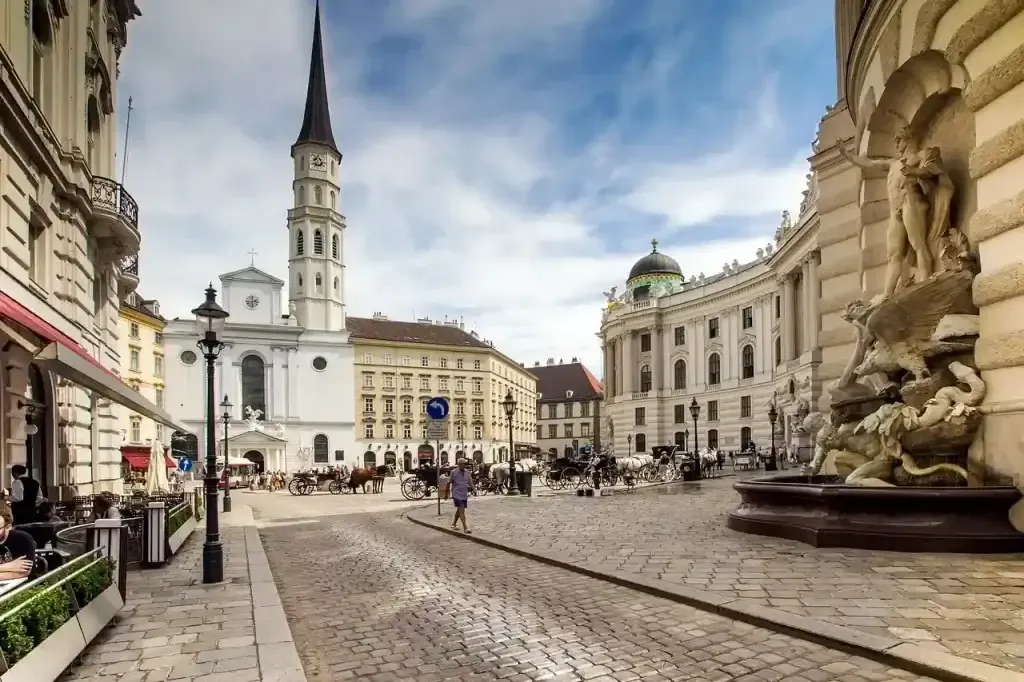
Michaelerplatz at Hofburg
Michaelerplatz is one of the best-known squares in Vienna. It serves as a meeting point between the modern city and the historic Michaelertrakt, the northern facade of the Hofburg Palace.
Support when you need it
Customer service to help you with all your needs from 8:00 a.m. to 7:00 p.m.
Fast and online booking
Choose the best option for your needs and preferences and avoid the lines.
Top attraction in Vienna
Experience the grandeur of Austria’s imperial history in the heart of the city.
Where is Michaelerplatz located?
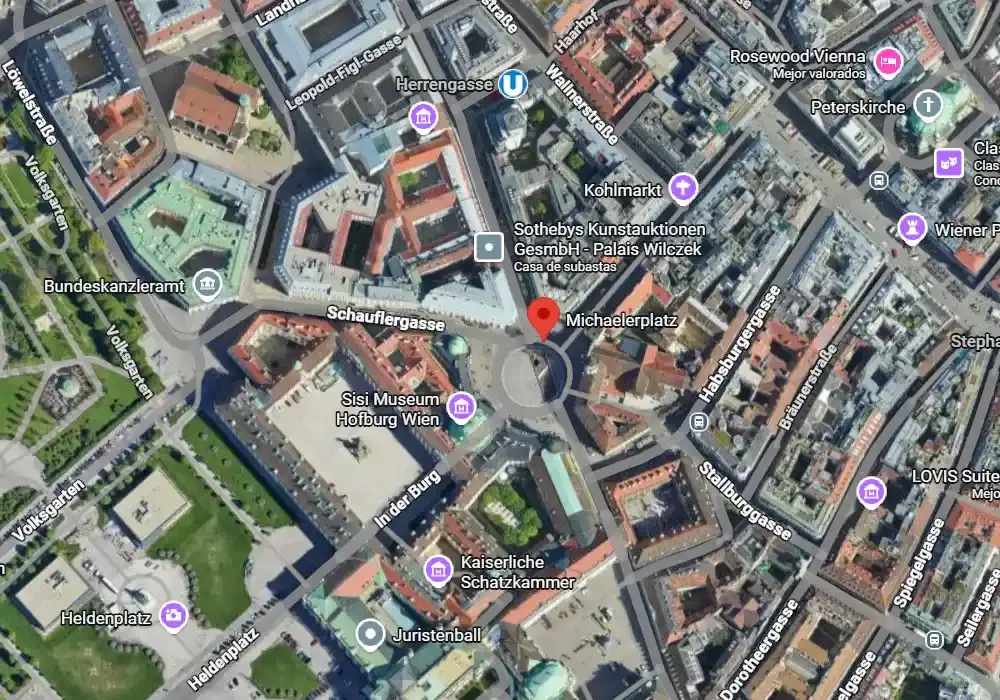
Where is Michaelerplatz located?
Michaelerplatz sits in the geographical center of Vienna’s 1st District. Specifically, at the intersection of Kohlmarkt, Herrengasse, and Reitschulgasse streets. Its exact address corresponds to the postal code 1010, Vienna, Austria.
This square represents one of the main entrances to the palace complex. It features the imposing Michaelertrakt facade of the Hofburg, which directly connects the old town with the inner courtyards of the former imperial residence.
As a central hub of the city, the square acts as a monumental threshold to the Hofburg Palace. It facilitates pedestrian access from the most exclusive shopping areas to the core of the Habsburg dynasty’s historical power.
What should you not miss at Michaelerplatz?
To understand the evolution of Vienna from its Roman origins to its imperial peak, visitors should explore the architectural, archaeological, and monumental elements found at Michaelerplatz:
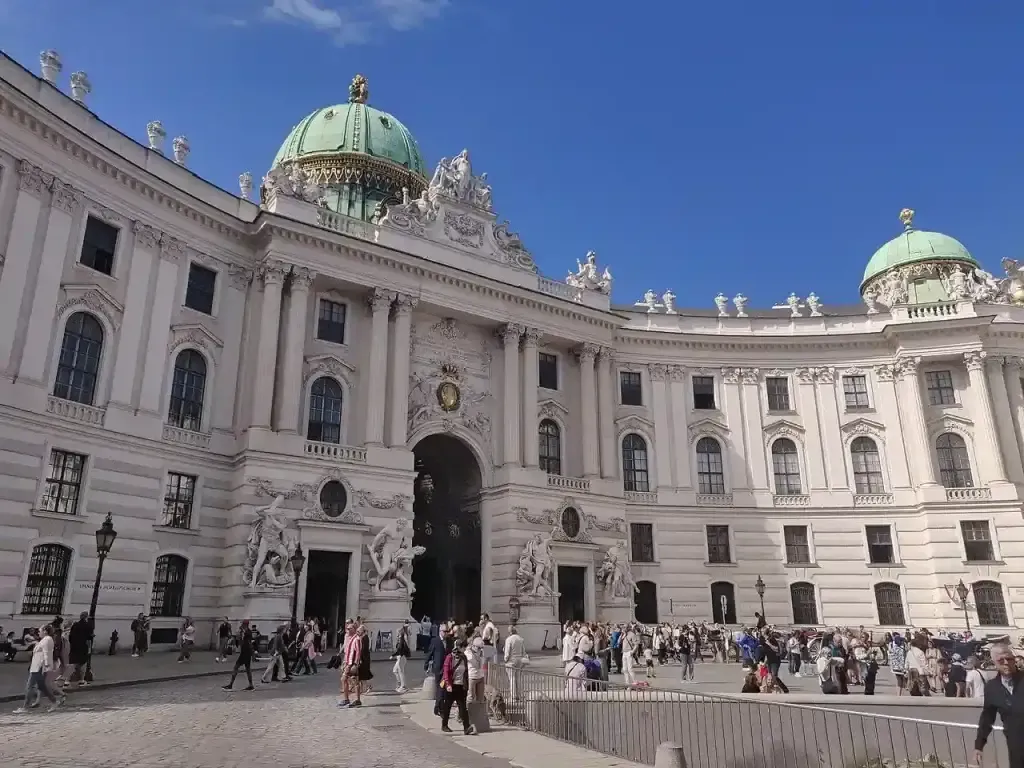
The Michaelertrakt and its Baroque facade
The Michaelertrakt is the palace wing that dominates the visual perspective of Michaelerplatz. Joseph Emanuel Fischer von Erlach originally designed this structure in 1726. However, Ferdinand Kirschner completed its construction at the end of the 19th century.
The facade features a semicircular shape that embraces the square. Monumental sculptures representing the “Labors of Hercules” decorate the building. Four sculptural groups flank the side fountains: “Power at Sea” by Rudolf Weyr and “Power on Land” by Edmund Hellmer. The central dome reaches a height of 50 meters and functions as the architectural link between the city and the palace.
Photo: “Michaelertrakt” by Lahcim n.
Roman archaeological excavations
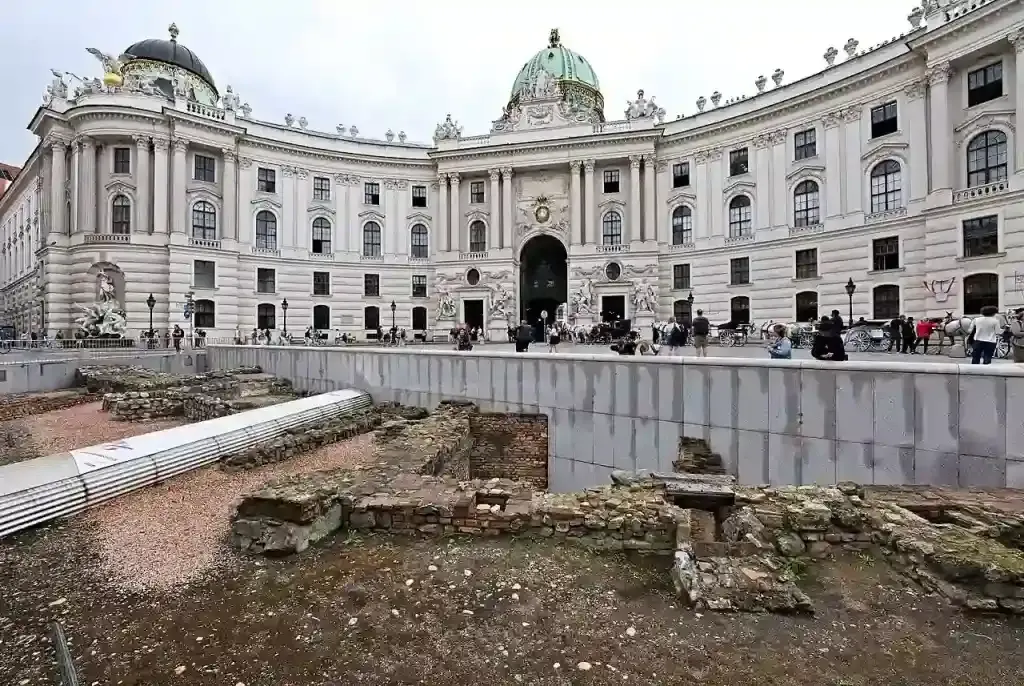
Roman archaeological excavations
Various archaeological ruins discovered between 1989 and 1991 remain permanently exposed in the center of Michaelerplatz. Architect Hans Hollein designed the open-air exhibition. These structures belong to the remains of officers’ houses from the Roman camp of Vindobona.
Besides the Roman vestiges, visitors can observe the foundations of medieval buildings and remains of the old city wall. This site allows for an understanding of the historical stratigraphy of Vienna and it shows how the city superimposed itself onto its Roman military origins.
Photo: “Michaelerplatz with Michaelertrakt Wien 2022” by GPSLeo.
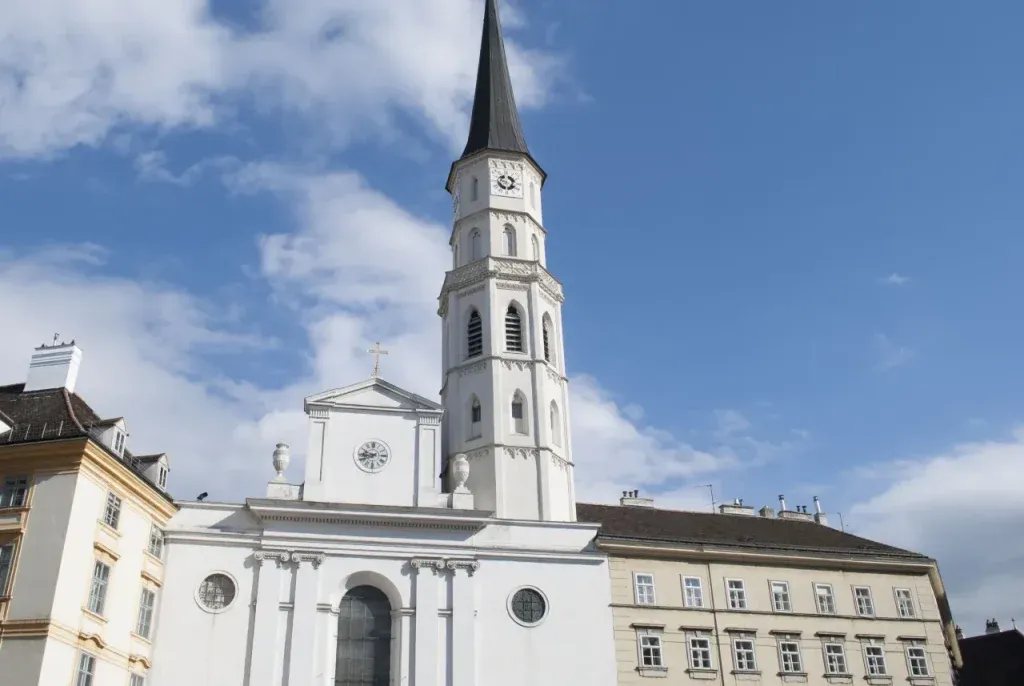
St. Michael's Church (Michaelerkirche)
The Michaelerkirche is one of the oldest churches in Vienna. Its origins date back to the 13th century. Although it possesses Romanesque and Gothic elements, its main facade features a Neoclassical style. Historically, this temple served as the parish of the imperial court.
A distinctive element of this church is its crypt. Natural climatic conditions preserved the mummified bodies of the Viennese nobility from the 17th and 18th centuries. The church also gained recognition as the site where musicians performed part of Mozart’s Requiem for the first time during his funeral in 1791.
Photo: “Michaelerkirche, Wien” by Diana Ringo.
The Looshaus
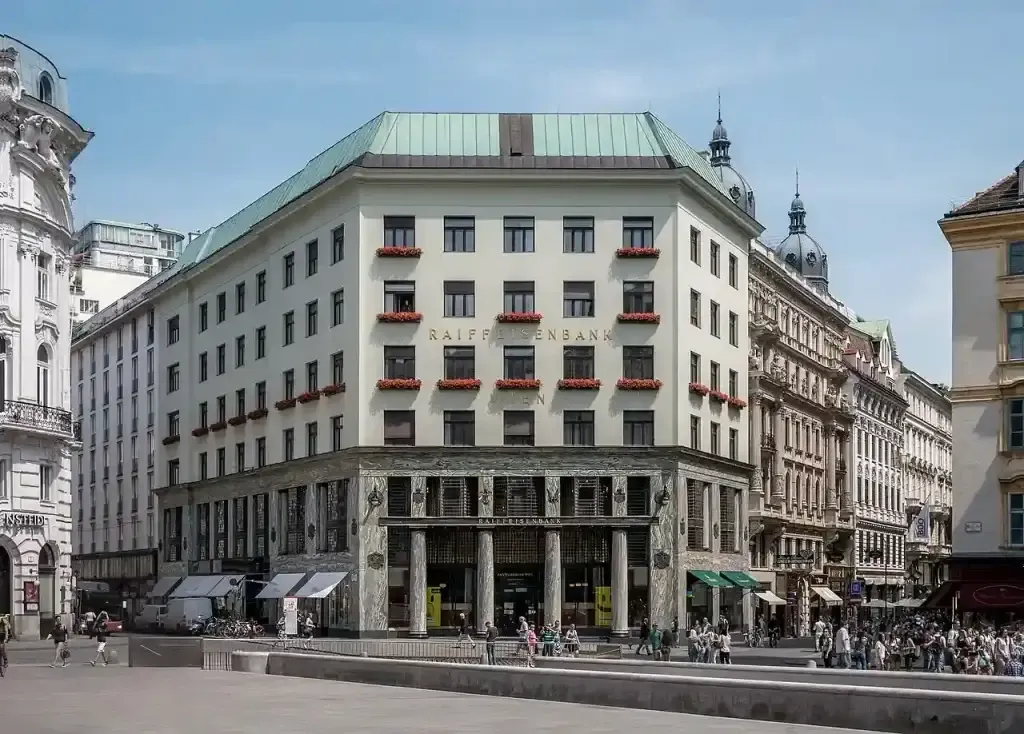
The Looshaus
The Looshaus stands opposite the Baroque opulence of the palace. Architect Adolf Loos built it between 1909 and 1911. This building caused great controversy in its time due to the absence of ornamentation on its windows. This lack of decoration earned it the nickname “the house without eyebrows.” In fact, a Reddit user notes: “at the time, the Looshaus was seen as an eyesore because of the clear break in architectural style.”
The building represents a fundamental milestone in the development of functionalism and modern architecture. The contrast between the sobriety of the Looshaus and the decoration of the Hofburg Michaelertrakt symbolizes the cultural transition from imperial Vienna to 20th-century modernity.
Photo: “Looshaus Michaelerplatz” by Stefan Fadinger.
Is it worth visiting if I am not going inside the Hofburg?
Yes, visiting Michaelerplatz is essential for any traveler in Vienna, even if they do not plan to enter the imperial museums. According to a Facebook user, this square is one of the “top places to visit” when traveling to Austria.
The square functions as an open-air museum. It synthesizes two thousand years of European history into a single walkable space. The visibility of the Roman ruins in the center of the square offers a unique archaeological perspective. This experience requires no entrance fee or waiting time.
Furthermore, the exterior architecture of the Hofburg Michaelertrakt provides a top-tier aesthetic experience. The dimensions of the dome and the detail of the Hercules statues allow the public to appreciate the magnitude of the Austro-Hungarian Empire from the street. The square also hosts the Fiaker, Vienna’s traditional horse-drawn carriages. This presence creates an authentic historical atmosphere that defines the visual identity of the city.
From an urban planning perspective, the square is the connection point between Kohlmarkt street and the heart of the palace complex. Kohlmarkt is famous for its architecture and historic shops like the Demel pastry shop.
Skipping this site would mean missing the axis where the Roman past, medieval ecclesiastical tradition, Habsburg Baroque splendor, and Adolf Loos’s modernist break converge. It is a free landmark that allows travelers to understand the evolution of Vienna without a guided tour.
What to see and do around Michaelerplatz?
The surroundings of this square offer a concentration of cultural, historical, and architectural sites. These locations allow visitors to delve into the imperial heritage and cosmopolitan life of the Austrian capital:
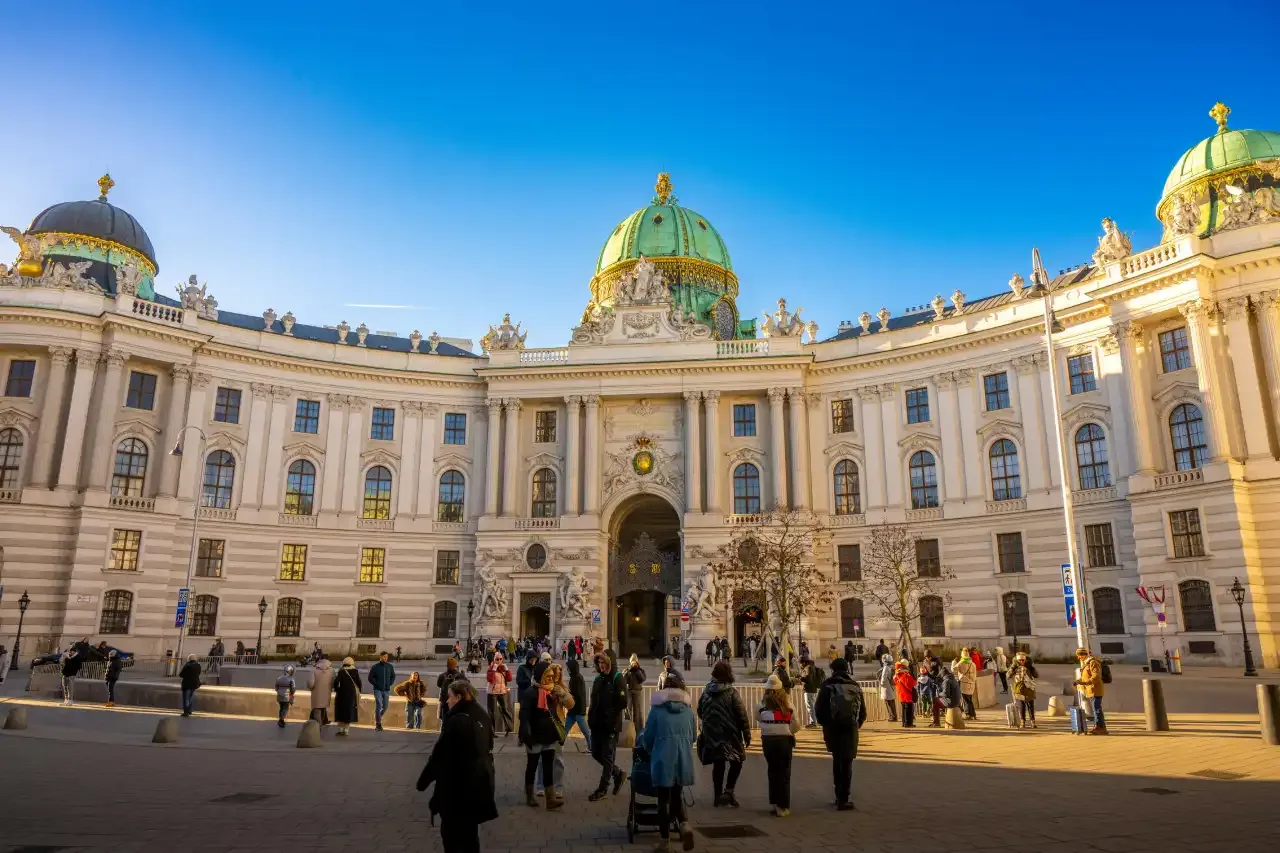
Hofburg Palace
The Hofburg Palace was the center of political power in Austria from the 13th century until 1918. Currently, the complex serves as the official residence and office of the President of Austria. It also houses important cultural institutions.
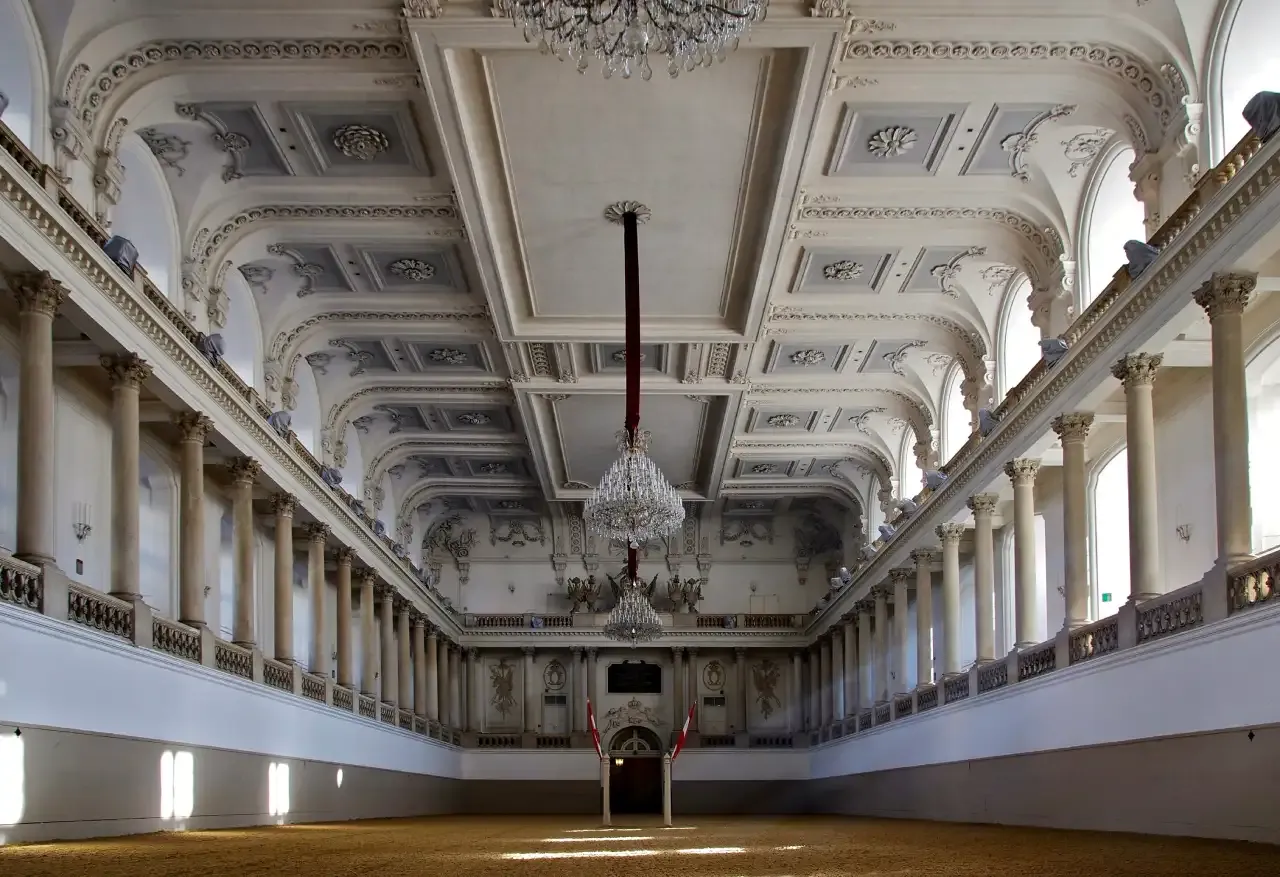
Visitors can explore the Imperial Apartments. These rooms preserve the original furniture and decoration used by Emperor Franz Joseph I and Empress Elisabeth, known as Sissi. The Sisi Museum, located within the complex, offers a detailed analysis of the Empress’s private life through personal objects and portraits. Regarding this, a Reddit user commented that during their visit to the museum “seeing her clothes, her things, and replicas of her famous gowns was amazing!” Another user noted: “I loved her little gym, so way ahead of her time.”